Welcome to WordPress. This is your first post. Edit or delete it, then start writing!
Blog
-
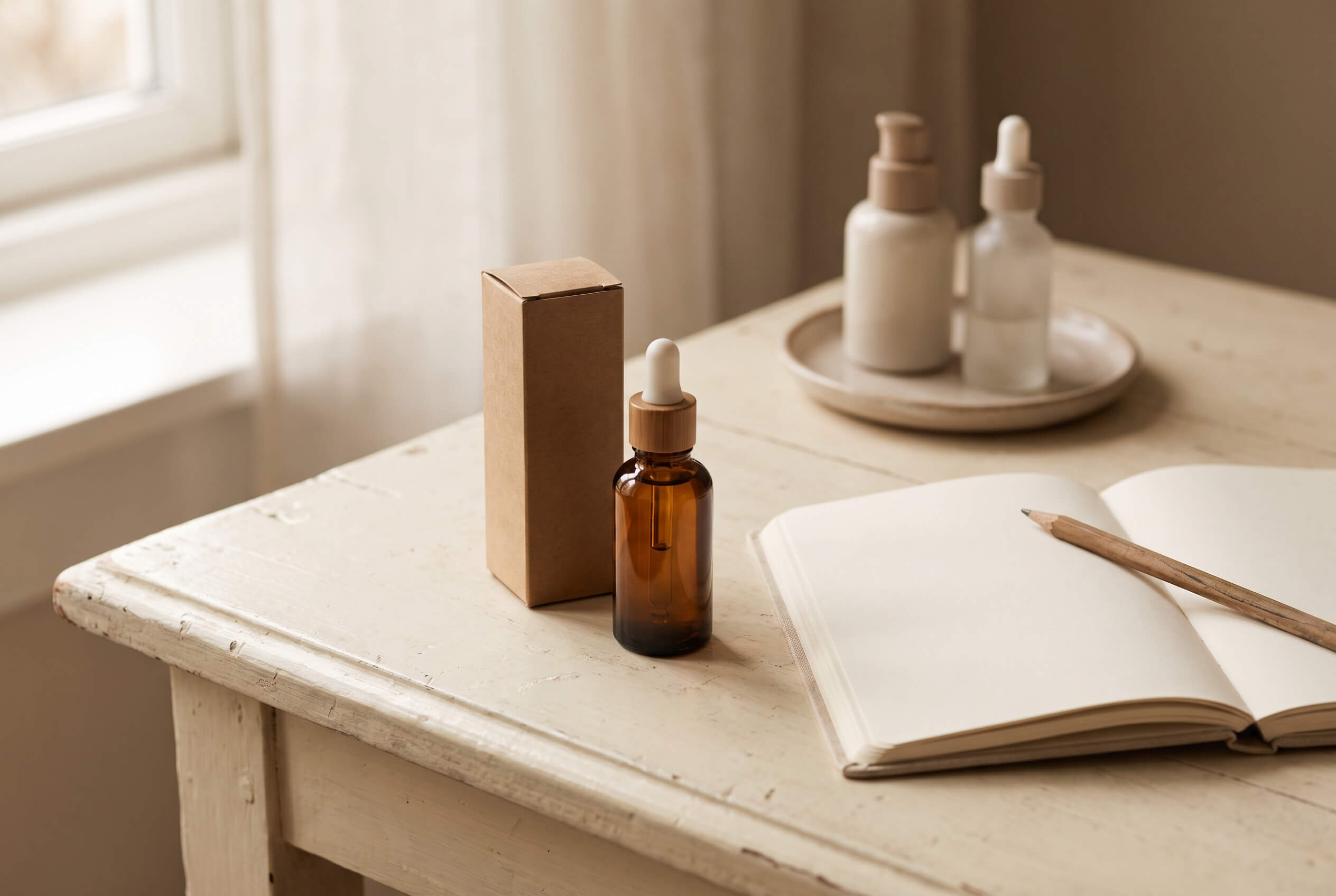
How to introduce one active at a time
A new bottle can make your whole shelf feel ready for a change. Before opening it, take a moment to decide what you actually want to learn. Perhaps you want to understand how a particular texture sits under your moisturizer, or whether an extra step fits into your evening. A clear question makes the experience easier to follow.
Our approach is to give each addition its own space. This is an organisational habit, rather than a promise about results: fewer simultaneous changes leave you with a clearer record of what you used, when you used it and how the experience felt.
Begin with the bottle in your hand
Read the directions on the actual product, including the outer carton if it carries additional information. Products with similar names can have different formulas and instructions. A familiar ingredient does not make two products interchangeable. Keep the packaging until you are confident you can find the directions again.
Write down the product name, where it belongs in your routine and any instructions you need to remember. If the label leaves an important question unanswered, ask the manufacturer before using it. If you use prescribed treatment, ask your clinician about introducing another product alongside it.
Give the rest of your shelf a quiet week
Choose a time when you are not also replacing your cleanser, moisturizer and makeup. Put the other unopened products somewhere separate. That small physical distinction makes it easier to resist turning one new step into a completely different routine.
You do not need a new calendar system. A note beside the product name can record the start date, the products used alongside it and any observations. Keep the language specific: the texture felt sticky under this cream, the bottle was difficult to dispense, or the instructions were easy to follow.
Test first, then follow the directions
The American Academy of Dermatology recommends testing new skincare on a small area before broader use. Its linked guide explains the process. A home trial cannot rule out every reaction or replace a clinical allergy assessment. If a product causes a reaction, stop using it; seek medical help for a severe or persistent reaction.
There is no universal schedule in this article for every active. The formula, the directions and your individual circumstances matter. Avoid borrowing someone else’s frequency simply because they use an ingredient with the same name.
Make your notes useful
A simple entry might read: Monday evening, new product used according to its instructions, usual moisturizer afterwards. Add an observation later if there is something meaningful to record. You do not have to photograph your face daily or score every sensation.
Include practical observations too. Did you remember the step without a reminder? Was the amount easy to judge? Did you have enough time to use it as directed? A product can be interesting on paper and still be awkward for your everyday life.
Review before adding anything else
Return to your original question. Decide whether you have enough information to keep the step, pause it or ask for advice. Do not treat an unfinished bottle as an obligation to continue using something that does not suit you.
If you decide to keep it, update your routine note so the next change starts from an accurate picture. The aim is a shelf you understand, with a clear reason for each product and instructions you can comfortably follow. There is no reward for making the routine longer.
A small planning card
Keep four lines in your phone: product name, directions, date opened and observations. Save a photograph of the packaging beside them. This gives you something concrete to refer to when contacting the brand or discussing your routine with a professional.
Before buying the next product, read those four lines again. They often tell you more about what belongs on your shelf than another shopping list. Leave yourself room to decide that your current routine is enough.
Further reading
-
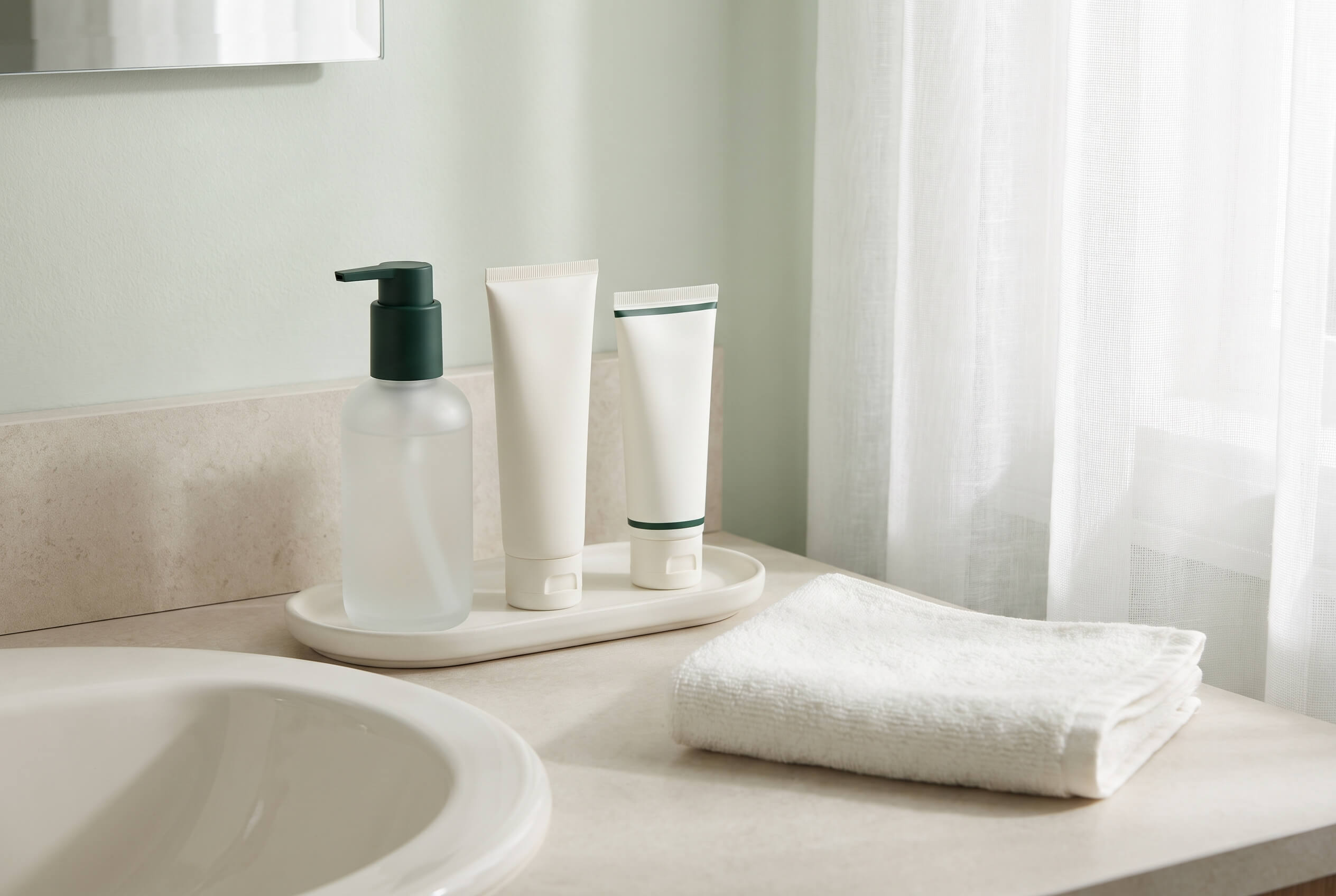
A simple morning routine, step by step
The best morning arrangement is one you can understand before your first coffee. You should be able to see which products you use, find their instructions and put them away without searching through an overcrowded shelf. Start with the morning you actually have, rather than an ideal version with unlimited time.
A routine can be short and still feel considered. Think about the jobs your products are doing, then place the bottles in a sequence that follows their directions. The arrangement is there to help you remember, not to impose extra steps.
Set out the essentials
Choose a small area for the products that belong to your morning. Leave occasional treatments elsewhere so they do not look like daily requirements. If you share a bathroom, a portable tray can keep your selection together without claiming the whole counter.
For general everyday care, the American Academy of Dermatology recommends gentle cleansing and appropriate sun protection. Its guidance includes broad-spectrum, water-resistant SPF 30 or higher alongside shade and clothing. Follow your sunscreen’s directions for amount, timing and reapplication.
Give each step a job
Read your moisturizer and any other product instructions together. Note where they fit and whether the manufacturer gives special application directions. There is no need to add a serum just to fill the space between two bottles.
Try writing the routine in plain language: cleanse, use the products that belong here, finish with sun protection as directed. Keep prescribed treatment instructions separate and follow the advice you were given. If two sets of directions seem to conflict, ask rather than inventing a compromise.
Make the packaging easy to read
Turn bottles so you can see their names. Keep a photograph of small print if that helps you read it comfortably. A label hidden at the back of a beautiful arrangement is less useful than one you can recognise immediately.
Avoid transferring products into decorative containers simply to make the shelf match. The original packaging keeps the product identity and directions together. A quiet arrangement can come from leaving space around the bottles you already own.
Plan for the rest of the day
Your morning does not end at the bathroom door. Think about where you will be and what you need to take with you. Put anything you will need later in a sensible place while you are still at home, and refer to its instructions throughout the day.
If you often forget a product, change the storage arrangement before adding more reminders. A small basket beside your bag may work better than a note you stop noticing. Keep products stored in the conditions their labels specify.
Keep a version for busy mornings
Write a short version of your routine that preserves your essential care and any medical instructions. This is not a timed challenge. It is a way of reducing decisions when the day starts earlier than expected.
At the end of the week, notice what was easy and what was cumbersome. You may need a better place for a bottle, a clearer label or fewer optional steps. A useful morning routine feels familiar enough to repeat without turning every day into a new experiment.
Further reading
-
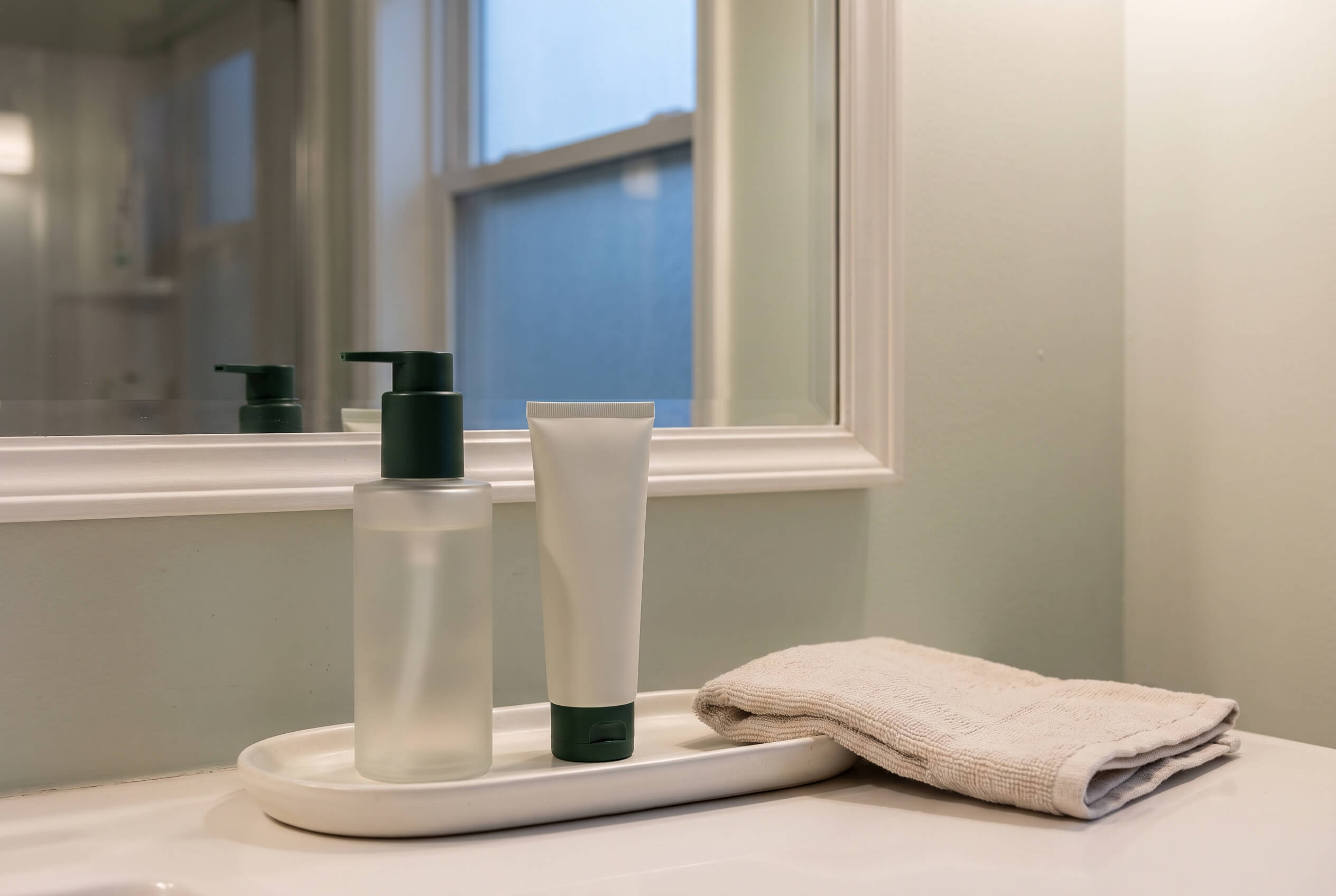
Building an evening routine you can keep
An evening routine begins long before you open a bottle. It begins with making the things you need easy to reach. A clean towel, enough counter space and the products you already understand can be more useful than a shelf full of options.
Think about the point in your evening when you still have the attention to read instructions and use products carefully. That might be before changing into sleepwear or just after you get home. The right cue is the one that belongs naturally to your day.
Separate daily from occasional
Place your regular evening products together. Keep occasional products in another area, with their directions intact. This prevents every bottle from looking like something you should use tonight.
If your routine includes prescribed care, organise around the instructions from your clinician. A general editorial routine should never rearrange those directions. The purpose of the shelf is to make your own instructions easier to follow.
Give cleansing its own moment
Look at what you wore during the day and follow your cleanser’s directions. The American Academy of Dermatology advises removing makeup before bed and avoiding scrubbing. An elaborate sequence is not the objective; a comfortable, understandable process is.
Keep accessories within reach and leave a place for them to dry or be cleaned appropriately. If you use a reusable cloth, plan how it moves into your laundry routine. A practical setup includes what happens after the product has been applied.
Write a routine you can actually read
Use product names instead of abbreviations only you understood when you wrote them. Include the directions that matter, without reducing them to a vague instruction such as use a little. Keep the complete label available for reference.
Your note can be as simple as a photograph of the products laid out in order. Avoid turning it into a long checklist of optional extras. The note should reduce decisions, not give you another task to complete.
Make room for tired evenings
Decide which optional parts you can leave out when you are tired. Keep your essential routine and prescribed instructions clear. You do not need a different shopping list for your busiest days.
Move the routine earlier if you repeatedly find yourself rushing it at bedtime. A familiar cue can help: after putting your bag away, before a book, or after brushing your teeth if that sequence works for you. Treat these as organisational ideas to adapt, not rules.
Close the loop
Put caps back on, return products to their proper storage and leave the surface ready for the morning. This final minute is part of the routine because it makes the next evening easier.
Review the arrangement when something changes in your schedule. A longer commute or shared bathroom may call for a smaller kit. Keeping a routine means allowing its practical setup to evolve while staying attentive to the directions for the products you choose.
An evening ritual does not have to look a certain way in a photograph. It needs to work for the person using it, on an ordinary evening, with the time and space they have.
Further reading
-
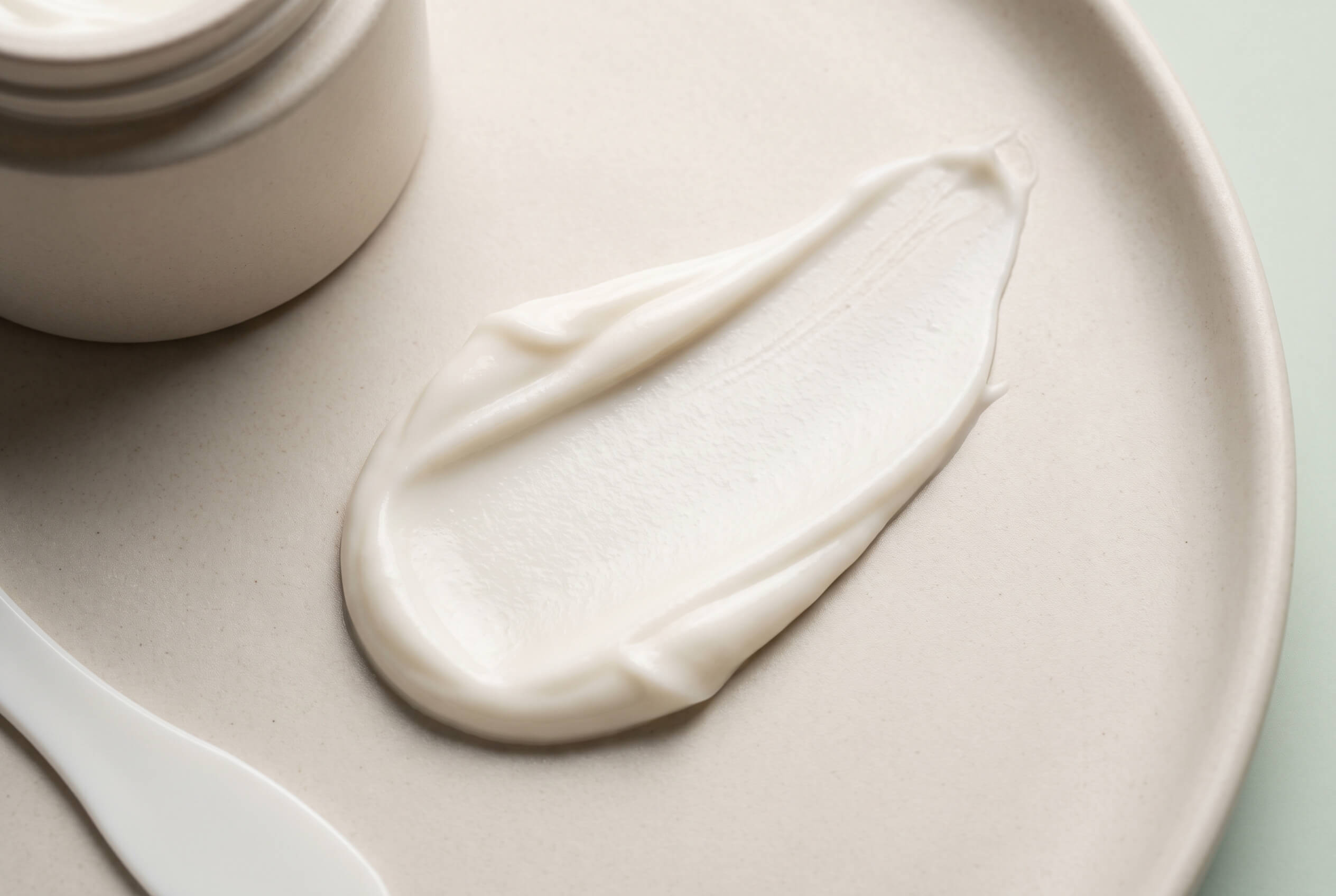
What ceramides do in a moisturizer
Ceramides often appear on the front of a moisturizer, where they can seem like the whole story. Turn the bottle around and there is usually a much longer ingredient list. That list is a useful reminder: you are choosing a finished product, with a texture, a package and a set of directions.
The question is not simply whether a cream mentions a familiar ingredient. It is whether you understand what the product is intended to do and whether its complete formula fits the routine you already have.
Look at the complete formula
Ceramides are lipids associated with the skin’s outer barrier. In a moisturizer they are part of a wider formulation. Moisturizers can combine ingredients that attract water, soften the skin and help limit moisture loss; no single headline tells you everything about the finished product.
A list of ingredient names is a starting point for questions rather than a scorecard. Avoid ranking two creams by the number of ingredients you recognise. The product information and your experience of the whole formula are more useful than counting familiar words.
Start with the format
Consider when and where you will use the product. A pump might be convenient beside a sink; a tube might fit your bag; a jar might be easy for you to handle at home. These are practical preferences that matter every time you reach for it.
Read the directions and any storage information before deciding. If a retailer’s description leaves out important details, check the manufacturer’s information. Keep the original packaging so you can identify the exact product later.
Think about texture in context
The texture you enjoy on the back of your hand may feel different when used in your usual routine. Note how the finished product spreads and how comfortably it sits alongside the other products you use. Record observations without turning them into claims about what is happening inside the skin.
For example, easy to spread and comfortable under my usual makeup are useful personal observations. A photograph of a cream cannot tell you either of those things. Leave space for your own preferences rather than treating a particular finish as the correct one.
Keep your comparison small
If you are choosing between products, compare a few practical details: product directions, format, quantity, ingredient information and the questions you still need answered. A short comparison is easier to use than a spreadsheet of every cream you have ever seen.
Do not assume that a more complicated description means a more suitable product. Equally, a short ingredient list is not a guarantee that a formula will suit everyone. The whole product and your circumstances remain relevant.
Choose a clear role on your shelf
Once you have chosen a moisturizer, give it a clear place in your routine according to its directions. Keep a note of the name and the date you opened it. There is no need to build an entirely new collection around one ingredient.
If you have a skin condition or are unsure about a product, ask a qualified professional for advice specific to you. An ingredient guide can help you ask better questions; it cannot decide which formula is right for every reader.
Further reading
-
Getting to know glycerin in skincare
Some ingredients receive a whole campaign. Others appear quietly on labels across many different products. Glycerin belongs to the second group, which makes it a useful place to begin learning how to read beyond the front of a bottle.
You do not need to memorise a dictionary of ingredients. Start with one name, understand its broad role, and then return your attention to the product as a whole. That is a more manageable habit than trying to decode every unfamiliar word in one sitting.
Understand the broad role
Glycerin is a humectant: an ingredient used to attract and hold water. DermNet lists glycerine among the humectants used in moisturizers. The feel and performance of a finished formula depend on more than this one ingredient.
This distinction is useful when shopping. Seeing glycerin on two labels does not mean the products will have the same texture, directions or intended use. Treat the shared name as one piece of information, not a reason to consider the bottles interchangeable.
Read the product description carefully
Ask what kind of product you are looking at. Is it a cleanser to rinse away, a leave-on moisturizer, or something else? The directions tell you how the manufacturer intends you to use the formula.
Keep marketing descriptions separate from instructions. Words about a fresh or silky feeling describe an experience; they do not replace details about where, when and how to apply the product. If those details are hard to find, that is a useful question to send to the brand.
Notice how the formula fits your day
Consider the packaging and the setting in which you will use it. A product that is easy to dispense and identify can be easier to keep in a regular routine. These ordinary details deserve a place beside the ingredient list in your decision.
Once you are using a product as directed, write down practical observations in your own words. Perhaps you prefer the pump, or the texture takes more attention to spread than you expected. Keep observations about your experience separate from assumptions about an individual ingredient.
Avoid building a routine from isolated names
An ingredient-led shopping list can quickly become a shelf of products with overlapping jobs. Before buying another bottle, ask where it would fit. If you cannot explain its role, save the information and return to it later.
There is no need to find a dedicated product for every ingredient you learn about. Your existing moisturizer may already contain several ingredients you are curious about. Reading its label can be a useful first step before looking for anything new.
Keep a small ingredient notebook
Write glycerin on one line, humectant on the next, and add the name of a product in which you have seen it. Record the source you used to learn about it so you can revisit the explanation.
As your notebook grows, organise it around questions rather than rankings. What is this ingredient’s general role? Which finished product contains it? What does the product label say? A few accurate notes can make a crowded shelf feel much easier to understand.
Further reading
-
Squalane: a closer look at the texture
Texture is often the first thing we notice about skincare. Before we can describe a finish precisely, we already know whether a product feels fluid, rich or easy to spread. Those observations can be useful, as long as we keep them separate from promises about results.
When a product highlights squalane, begin with the same careful questions you would ask about any formula: what is the product, how is it used, and what does the maker tell you about the complete ingredient list?
Begin with the exact name
Copy the ingredient name from the label when researching it. Similar-looking words can lead to different information, and a shortened product nickname can make it harder to find the right directions later.
Keep the full product name and manufacturer together in your notes. This helps when comparing information from a retailer with the packaging you actually received. If the lists differ, ask the manufacturer which applies to your bottle rather than guessing.
Describe what you can observe
Use concrete language for a texture: fluid when dispensed, easy to spread, or a noticeable finish after application. These descriptions are more useful than assuming a particular feeling proves that the product is working.
A texture preference is personal and contextual. The finish you enjoy during an unhurried evening may not be what you want before makeup. Neither preference needs to become a rule for everyone else.
Keep the formula in view
Products that highlight the same ingredient can differ in many other ways. Compare the complete product information and the instructions, rather than treating one word on the front label as a full description.
Avoid adding an extra step simply because you want to try a different texture. First identify the place it would occupy in your routine. If you are not sure how it should be used with your existing products, ask for directions specific to those products.
Choose packaging for everyday use
Think about how you handle the container with clean hands. Is the cap easy to close? Can you see the product name without picking up three other bottles? Is the format practical for the place you intend to keep it?
These questions may sound ordinary, but they are part of the experience every day. A beautiful bottle can still be inconvenient in a narrow cabinet. Measure the space you have before choosing the format you want.
Build a useful comparison
Compare two options on paper using the same headings: name, product type, directions, package size and unanswered questions. Leave a separate area for personal texture notes if you have used the product appropriately.
Do not fill gaps with assumptions based on photographs or the colour of a formula. Where an ingredient comes from, how a product is made and what it can claim should come from documented information supplied by the maker.
Leave room for a simple decision
You may decide that your current routine already has the texture and format you enjoy. Learning about an ingredient does not need to end with another purchase. Save your notes for the next time you actually need to replace a product.
The most useful outcome is a clearer understanding of what you like and what you still want to ask. That knowledge stays with you longer than a trend, and it makes the next label easier to approach.
-

Getting to know your skin barrier
Barrier care appears on many skincare shelves, but the phrase can become so familiar that it stops explaining anything. Begin with a simple idea: the skin’s outer layer helps separate the body from its surroundings and helps limit water loss. That is a useful foundation, rather than a diagnosis you can make from a photograph.
A general guide should help you ask clearer questions. It should not turn an ordinary change in how your skin feels into a reason to buy a whole new routine.
Keep the basic idea simple
The outer skin includes cells and lipids that contribute to its barrier function. Moisturizers can support skin hydration through different ingredients and mechanisms. The linked DermNet resource explains the broader roles of moisturizers.
You do not need a complicated analogy to use this information. Think about the difference between a general description of skin and a specific claim about a product. Understanding the first does not automatically prove the second.
Write down observations, not diagnoses
If something has changed, note what you can actually observe and when it started. Include new products or changes in your routine that might be relevant. Use your own ordinary language rather than choosing a diagnosis from social media.
A clear record is useful if you ask a professional for advice. It is more informative to bring the product names and a timeline than to arrive with a long list of ingredients you have decided must be responsible.
Review the products you already own
Read directions and product information before adding anything new. Check whether several products occupy the same place in your routine. Put unopened options aside while you decide what question you are trying to answer.
A shelf review can be purely practical. You may discover that a product name is hard to read or that instructions were left on a carton in another room. Gathering the information in one place makes future decisions easier.
Look beyond the headline
A barrier-related product name is not a full explanation of the formula. Look for its intended use, directions and complete ingredient information. Ask the maker about any claim you do not understand.
Do not expect every product with the same word on its label to feel or behave identically. The format, formulation and directions can differ. A useful comparison focuses on complete products rather than sorting them by one marketing phrase.
Know when a guide is not enough
Persistent or severe skin symptoms deserve advice from a qualified clinician. Bring your notes and the relevant product information. A general article cannot assess your skin or replace care tailored to you.
If you have already been given medical instructions, keep them central to your routine. Educational reading can help you understand the conversation, but it should not prompt you to change prescribed care on your own.
Make understanding the goal
Choose one question to explore next. It might be about a moisturizer’s texture, the wording on a label or how a product should fit your existing routine. A specific question is easier to answer than the idea that everything needs to change.
Barrier care becomes more useful when it means paying attention to clear information and your own circumstances. You can learn something worthwhile today without adding another bottle to the shelf.
Further reading
-
A gentler approach to cleansing
Cleansing is often treated as the step to rush through before the interesting products. Yet it is also the point at which your routine becomes a physical habit: turning on the tap, reaching for the bottle and finding a towel. A thoughtful setup makes that habit easier.
Start with your cleanser’s own directions. A milk, balm and gel may have different instructions, and the appearance of a product is not enough to tell you how to use it.
Read before you begin
Check whether the instructions specify wet or dry skin, how the product should be removed and any areas to avoid. Keep those directions available until they are familiar. If your bottle does not carry enough information, consult the manufacturer’s product page.
Avoid following a generic online sequence when it contradicts the product label. A video may show a different formula or a different version of a familiar product. Identify the bottle you own before copying the method.
Give yourself room
Clear enough space to put the bottle down securely. Place a clean towel within reach and move unrelated products out of the immediate area. This is especially useful in a shared bathroom where a crowded surface can make a simple task awkward.
Arrange the space around access, not symmetry. A product you can reach without knocking over another bottle is in a better place than one that only looks neat in a photograph.
Keep the touch unhurried
The American Academy of Dermatology advises against scrubbing the skin. Follow your product’s directions and avoid turning cleansing into an attempt to polish away every visible feature.
If you find yourself adding accessories because a routine looks too simple, pause and identify what you need them to do. Extra objects also bring cleaning and storage responsibilities. A useful tool should have a clear purpose in your own setup.
Match the routine to the instructions
Some evenings involve makeup and some do not. Refer to the products you use and their removal directions instead of assuming the number of cleansing steps must always stay the same. Ask the manufacturer if the intended use is unclear.
Write the method down in your own words while keeping the full instructions nearby. A short note can help you remember a detail without replacing information such as warnings or recommended use.
Put things away deliberately
Close the bottle and return it to suitable storage. Plan what happens to any cloths or accessories after use. A routine that leaves you with a wet pile of objects is harder to repeat comfortably the following day.
If a product or method is uncomfortable, do not make finishing the bottle your goal. Seek advice when needed and keep a record of what you used. The point of a routine is to support everyday care, not to create a task you feel obliged to endure.
Review one small detail
At the end of the week, choose one practical improvement. Move the towel, improve the lighting for reading labels or make room for the cleanser you use most often.
Small changes to the setup can make a familiar step feel more considered. You do not have to replace everything to make the beginning and end of your routine easier to follow.
Further reading
-
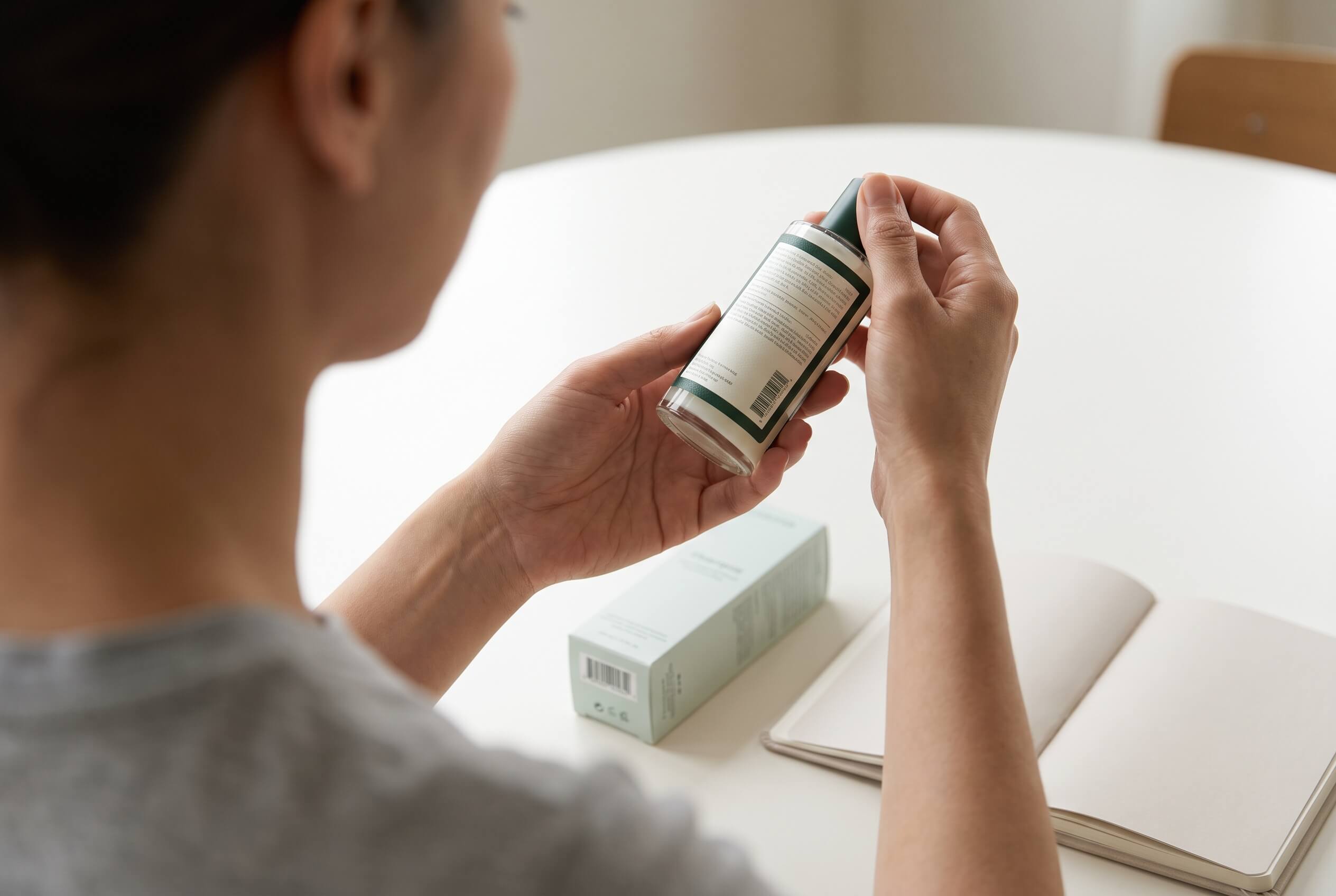
Reading a skincare label with confidence
A skincare label has several jobs to do in a very small space. It identifies the product, explains how it is intended to be used and carries details that may only matter when you have a question later. Reading it is easier when you give yourself a clear order.
You do not have to understand every technical word before making a useful start. Begin with information you can locate and keep, then identify the questions you still need answered.
Find the exact product identity
Write down the full product name and maker. Similar names within a range can refer to different formulas, sizes or intended uses. Keep a photograph of the front and back together so you can refer to the same product when searching online.
If you contact customer support, include the precise name rather than a description such as the green bottle. Keep any batch information available too. Clear identification saves both sides from discussing a different product.
Read the directions as a whole
Look for how to apply the product, whether it is rinsed away, any timing information and warnings. Read the surrounding text rather than lifting one sentence out of context.
A retailer’s short description may leave out instructions from the package. Where information differs, ask the manufacturer to clarify. Do not improvise a combination of conflicting directions.
Use the ingredient list to ask questions
Copy unfamiliar names accurately if you want to research them. Avoid deciding that a long word is automatically undesirable or a familiar word automatically suitable. An ingredient list is not a simple good-or-bad score.
You are using a complete formula. Learning an ingredient’s general role does not tell you every detail about the product containing it. Keep product claims, personal preferences and basic ingredient information separate in your notes.
Keep storage information
Look for the maker’s storage and usable-life guidance and retain it with the product. The FDA explains that how cosmetics are stored and handled can affect their usable life. Ask the manufacturer if the information you need is missing.
An opening-date note can be useful beside your product record. Do not rely on memory when several bottles look similar. A small record is easier to maintain than reconstructing dates months later.
Know what you still do not know
Write a short list of unanswered questions before contacting a brand. Ask about the exact product, the wording you do not understand and the information you need in order to use it as directed.
Avoid asking a label to answer a question that requires individual medical advice. If you have a diagnosed condition, allergies or prescribed treatment, bring the product information to an appropriate professional.
Create a reusable reading habit
Use the same order each time: identify, read directions, review ingredients, keep storage details, then ask questions. This makes a new label less overwhelming without pretending that every product is simple.
The aim is to leave with enough information to make a considered decision. You may choose the product, ask for clarification or decide to wait. All three are more useful than buying something whose directions you cannot confidently follow.
Further reading